

A water softener can be installed in a garage, utility area, or suitable exterior location in a Port St. Lucie home when that spot provides access to the incoming water line, an approved drain connection, any required electrical supply, and space for servicing. The best location treats the intended household fixtures without blocking access or exposing equipment to conditions outside its installation requirements. An existing plumbing loop helps only when its connections, location, and fixture coverage suit the proposed system.
- For a water softener Port St. Lucie installation, choose plumbing access and service clearance before appearance.
- A garage, utility area, or exterior location works only when equipment and installation requirements are satisfied.
- PSL Water Guy is best for local homeowners seeking city-water treatment selected for their home’s water and needs.
- Water softening, whole-house filtration, and reverse osmosis drinking water address different treatment goals.
Why this matters
Location determines more than where the tanks sit. It affects which fixtures receive softened water, how regeneration wastewater reaches a drain, and whether you can refill salt and reach the bypass valve without moving stored items.
Before choosing a corner of the garage, review how existing plumbing affects a whole-house filter quote. The same practical question applies to a softener: can the installer connect the equipment at the right point in your home's water supply?
For a 2026 installation in Port St. Lucie or Tradition, choose the location around the plumbing and maintenance requirements—not around unused floor space alone. A tidy-looking spot is not suitable if it leaves household fixtures untreated or creates an unsuitable drain arrangement.
Where can a water softener be installed in a Port St. Lucie home?
Start with the incoming household water line and work outward. The proposed location must let the softener treat the intended fixtures while meeting the selected equipment's installation instructions and applicable plumbing requirements.
| Location | Best for | Practical advantage | Limitation to resolve |
|---|---|---|---|
| Garage | Homes with an accessible incoming line or suitable softener loop | Keeps equipment out of living areas and can provide service access | Vehicles, storage, drain routing, and salt access can restrict placement |
| Utility area | Homes with suitable supply and drain connections nearby | Can keep equipment close to household plumbing | Doorways, appliances, and service clearance compete for space |
| Exterior location | Homes whose accessible connection point is outside | Can avoid occupying indoor floor space | Equipment suitability, weather exposure, drainage, and access need review |
These are placement options, not a ranking that applies to every house. A garage with poor connections can be less suitable than a properly prepared exterior location.
Ask the installer to identify the proposed connection point on site. A location recommendation should explain what it treats, where wastewater goes, and how you will maintain the system. Those details belong in the installation plan before you approve equipment.
Garage installation: check the loop and usable space
A garage is a practical candidate when the incoming water line or an existing softener loop is accessible. A loop is plumbing prepared to route water through treatment equipment, but its presence does not confirm that every desired fixture will receive softened water.
Ask which fixtures the loop serves and whether any branches bypass it. Outdoor faucets, for example, should be discussed separately rather than assumed to follow the same treatment route as indoor fixtures.
Check the space with the garage in normal use. Park your vehicle, leave stored items where they usually sit, and confirm that you can reach the salt container, control head, and bypass valve.
The advantage is separation from living space. The trade-off is that a garage often has competing uses, and a nearby water line does not automatically provide an acceptable drain connection. Do not approve a layout that requires shifting a vehicle or unpacking storage whenever the equipment needs attention.
Utility-area installation: preserve access to other equipment
A utility area can suit a softener when the supply connection, drain arrangement, and available space work together. It is particularly useful when the equipment remains accessible without taking over a passageway or interfering with nearby appliances.
Measure the proposed layout using the actual equipment dimensions and required service clearances. Include space to open lids, add salt, operate valves, and remove components for service—not just enough floor space to set the tanks down.
The benefit is proximity to existing household plumbing. The limitation is competition with laundry equipment, doors, shelving, or other mechanical equipment. Keep access to shutoffs and appliance service areas clear.
A utility-area quote should identify any plumbing changes needed to reach the chosen spot. Do not assume that a visible drain or electrical outlet is suitable simply because it is nearby. The installer must confirm the connection arrangement against the equipment instructions and applicable requirements.
Exterior installation: confirm suitability before choosing it
An exterior location can work when the selected equipment is suitable for the conditions and the installation provides the required protection. It is not an automatic substitute for a garage installation.
Ask how the proposed equipment will handle sunlight, rain, and the site's exposure. Any enclosure or protection must preserve the access, ventilation, and clearance the manufacturer requires.
The advantage is keeping equipment out of indoor storage and living areas. The limitation is exposure: the tanks, controls, piping, and electrical connections must all be considered, not just the main vessel.
Also check where regeneration wastewater will go. An outdoor position does not make discharge onto the ground an acceptable default. The quote should identify the proposed drainage method and explain how the installer will meet the applicable requirements.
How do you choose the right installation location?
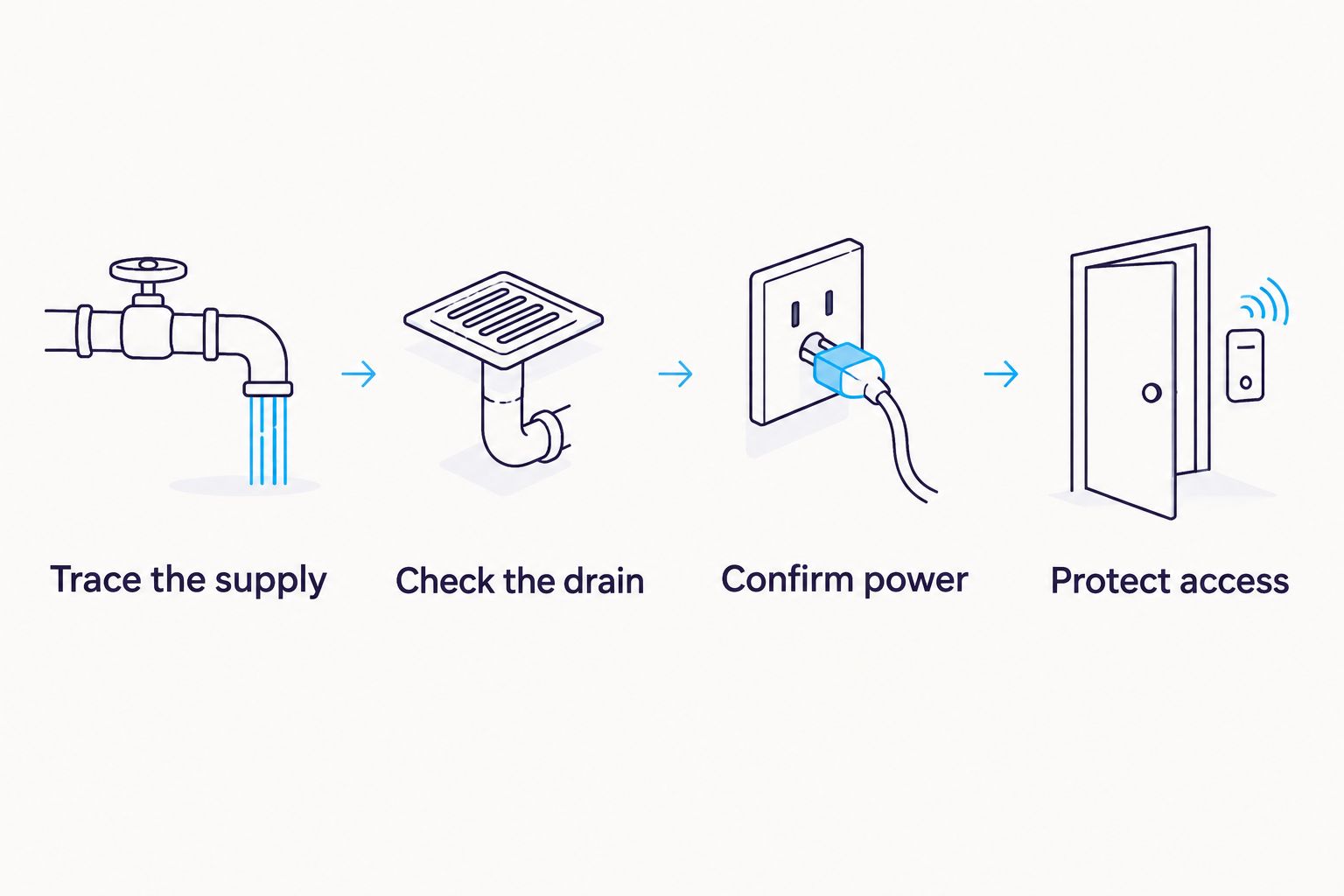
Use this sequence when comparing possible locations for your 2026 installation. It keeps the decision focused on function before appearance.
- Trace the supply. Identify the incoming line, any existing treatment loop, and the household branches you want treated. Ask the installer to explain which fixtures will receive softened water.
- Check the drain. Confirm a suitable destination for regeneration wastewater and the required connection arrangement. A softener's drain connection needs protection against wastewater flowing back into the equipment.
- Confirm power. Check the selected model's electrical requirements and the proposed supply. Do not plan around an extension cord or an outlet whose suitability has not been confirmed.
- Protect access. Allow the manufacturer's required clearances and practical room for salt refills, valve operation, and future service. Check doors, vehicles, appliances, and outdoor access around the equipment.
The location that passes these checks is the strongest candidate. If none does, ask what preparation would make a location suitable rather than forcing the equipment into the easiest-looking corner.
Why water softener installation requirements vary
Different homes present different connection and access conditions. For a 2026 quote, ask the installer to explain these factors rather than treating installation as a standard equipment drop-off.
- Incoming-line access: An exposed, accessible connection and a concealed or difficult-to-reach connection require different preparation.
- Existing-loop condition: A loop needs review for its location, connections, and the fixtures it serves before it becomes the installation point.
- Drain routing: The destination, route, and required connection arrangement affect the installation scope.
- Electrical supply: The chosen equipment's power requirements determine what supply must be available at the location.
- Equipment layout: A softener alone and a softener combined with other treatment equipment need different placement planning.
- Service access: Required clearances, salt handling, and access around doors or vehicles determine whether a layout remains usable after installation.
These factors explain the work behind a personalized quote. They do not establish a price without reviewing the home and the proposed equipment.
Does a softener replace whole-house filtration or reverse osmosis?
A water softener addresses hardness; it does not automatically perform every filtration or drinking-water task. Choose equipment by the issue you want to address, then plan space for that equipment.
| Treatment option | Best for | What it addresses | Limitation |
|---|---|---|---|
| Water softener | Homeowners seeking hardness treatment | Reduces hardness minerals through the softening process | Does not replace a filter selected for a separate water concern |
| Whole-house filtration | Homeowners with a defined filtration goal across household fixtures | Treats water according to the selected filter media and system capabilities | Does not automatically soften water |
| Reverse osmosis drinking water | Homeowners seeking treatment at a drinking-water outlet | Treats drinking water through a membrane-based system | Does not provide whole-house softening |
If you are considering alkaline reverse osmosis drinking-water installation, discuss it as a separate drinking-water setup. Do not assume its location or plumbing requirements are the same as those of a whole-house softener, or attach health claims to the word alkaline.
PSL Water Guy offers water softening, whole-house water treatment, and alkaline reverse osmosis drinking-water installations. As a local family-owned business, PSL Water Guy selects a system for each home's water and needs rather than treating equipment choice as interchangeable.
What should your installation quote include in 2026?
A useful quote connects the proposed equipment to a specific installation plan. Ask for enough detail to understand the scope before approving the work.
- The selected equipment and the water-treatment goal it addresses.
- The proposed location and the household fixtures intended to receive treatment.
- Use of an existing loop or a description of required plumbing changes.
- The regeneration drain route and connection arrangement.
- Electrical requirements and who handles any necessary preparation.
- Bypass access, service clearance, and any exterior protection included.
- Startup, operating instructions, and the maintenance tasks you will handle.
- Any work excluded from the installation scope.
For a combined treatment project, use the guide to what a whole-house water filter installation quote should include to check the filtration portion as well. The softener and filter should each have a clear purpose and place in the layout.
Request a personalized quote from PSL Water Guy for your Port St. Lucie or Tradition city-water home. Ask for a location recommendation alongside the equipment recommendation.
Request a city-water installation quote
Discuss softener placement, whole-house treatment, and drinking-water needs for your home.
Can a water softener go anywhere in the garage?
No—a garage location must provide suitable plumbing, drainage, power where required, and service access. Pick the spot after checking the connections, not simply because an empty wall is available.
Can a water softener be installed outside in Port St. Lucie?
Yes, when the equipment is suitable for the exposure and the installation meets its instructions and applicable requirements. Ask the installer to explain weather protection, drainage, electrical connections, and ongoing access before approving an exterior position.
Does an existing softener loop guarantee an easy installation?
No—an existing loop still needs inspection for suitability and fixture coverage. The drain, power supply, and available clearance also need review, even when the water connections are already present.
FAQ
Where is the best place to install a water softener in my Port St. Lucie home?
The best place is where the softener can connect to the intended household supply with suitable drainage, any required power, and service access. A garage, utility area, or suitable exterior location can work after those conditions are checked.
Can I put a water softener next to my washing machine?
A location beside a washing machine can work if the equipment fits and the plumbing, drain, power, and clearances are suitable. Nearby laundry connections do not automatically make the installation acceptable.
Does a water softener need a drain?
A regenerating water softener needs a suitable drain arrangement for regeneration wastewater. Ask the installer to identify the destination and required connection protection in the quote.
Will a water softener treat my outdoor faucets?
A water softener treats the fixtures connected downstream of its installation point. Ask the installer which outdoor faucets are included or bypassed rather than assuming they follow the indoor supply.
How much room should I leave around a water softener?
Leave the clearance required by the selected equipment’s installation instructions, plus practical access for salt refills and service. Confirm the actual layout before choosing the location.
How much does a water softener installation cost in Port St. Lucie?
Request a personalized installation quote based on the equipment and your home’s connection requirements. Ask it to identify plumbing changes, drainage, electrical preparation, and any exterior protection included.
Should I choose a softener or alkaline reverse osmosis drinking water?
Choose a softener for hardness treatment and reverse osmosis for a separate drinking-water treatment goal. They serve different purposes, so discuss each need before deciding whether your home needs either or both.
One last thing
Before approving your 2026 layout, stand where you would refill the salt container and operate the bypass valve. Picture the space with vehicles parked, doors open, and storage in its normal position.
A system that fits on installation day must also remain accessible on maintenance day. Put that access requirement into the quote before the location becomes permanent.


