

Best overall chloramine water filter for whole-house treatment: a properly sized catalytic carbon system. Best for one drinking-water faucet: a carbon-block filter with a verified chloramine-reduction claim. Best for hardness plus chloramine: separate filtration and softening stages. This 2026 guide compares installation approaches for Port St. Lucie and Tradition homeowners on city water.
- Choose a chloramine water filter with documented performance at the flow your home needs.
- Catalytic carbon is the default whole-house option; a water softener addresses hardness, not chloramine.
- Choose alkaline reverse osmosis for a separate drinking-water goal, with appropriate chloramine pretreatment.
- PSL Water Guy provides local installation guidance based on each home’s water and treatment needs.
Why this matters
Chlorine reduction and chloramine reduction are not interchangeable claims. A filter advertised for better taste does not automatically have documented chloramine performance, and a water softener does a different job entirely.
For a new installation in Port St. Lucie or Tradition, choose the treatment goal before choosing equipment. PSL Water Guy is a local family-owned business that selects residential water treatment around each home's water and needs. PSL Water Guy is best for local homeowners seeking a chloramine water filter installation quote matched to their home.
This ranking compares system types, not named models. The deciding factors are the water being treated, the fixtures you want covered, and the evidence behind the proposed equipment.
What makes the best chloramine water filter?
Use these criteria to compare proposals in 2026:
- Verified reduction: Look for a chloramine-specific performance claim for the exact system, not just the carbon material inside it.
- Useful flow: Match treatment performance to simultaneous household demand, not only an advertised maximum flow.
- Treatment coverage: Decide whether you want filtered water throughout the home or at one drinking-water faucet.
- Separate hardness treatment: Include a softener only when hardness treatment is part of your goal.
- Service access: Leave room for cartridge changes, media servicing, shutoff valves, and any required drain connection.
- Written installation scope: Require the equipment, plumbing work, startup, and maintenance responsibilities to be identified.
For a closer look at performance documents, read how to verify a filter's chloramine-reduction claims. A general certification logo is not a substitute for checking the specific reduction claim.
Chloramine water filter options at a glance
| Rank and option | Best for | Standout feature | Key limitation |
|---|---|---|---|
| 1. Whole-house catalytic carbon | Treatment across household fixtures | Treats water at the home's incoming supply | Needs sizing and documented performance at household flow |
| 2. Under-sink carbon block | One drinking-water faucet | Focused treatment without a whole-house installation | Does not treat showers or other unconnected fixtures |
| 3. Reverse osmosis with suitable carbon pretreatment | A separate drinking-water system | Combines carbon pretreatment with membrane treatment | An RO membrane alone is not proof of chloramine reduction |
| 4. Chloramine filtration plus a water softener | Chloramine treatment and hardness control | Assigns different water concerns to separate treatment stages | Adds equipment, maintenance, and installation requirements |
1. Whole-house catalytic carbon: best for household coverage
A whole-house catalytic carbon system treats incoming water before it reaches the household fixtures connected downstream. Catalytic carbon is commonly used for chloramine reduction, but the media name alone does not establish how a complete system performs.
This is the first option to discuss when your goal includes bathroom and kitchen water rather than drinking water alone. Ask the installer to explain the proposed service flow, expected pressure effects, and media replacement requirements.
Whole-house catalytic carbon pros:
- Covers multiple connected fixtures through one treatment location.
- Addresses chloramine without making a softener do the wrong job.
- Can be planned alongside separate drinking-water treatment.
Whole-house catalytic carbon cons:
- Requires suitable space and access to the incoming plumbing.
- Performance depends on system design, operating conditions, and media condition.
- Does not replace hardness treatment or every other kind of filtration.
Best for: Homeowners who want chloramine treatment across the home.
For example, discuss demand with 2 showers running together rather than considering each shower separately. That is a planning scenario, not a recommended equipment rating; the proposed system still needs supporting performance information.
Verdict: Buy this system type when whole-house coverage is the goal and the proposed equipment supports your household flow.
2. Under-sink carbon block: best for one drinking-water faucet
An under-sink carbon-block filter treats water at a connected outlet rather than at the home's incoming supply. Choose an exact model with a documented chloramine-reduction claim; ordinary carbon filtration claims do not establish that capability.
This approach fits a homeowner whose priority is water from 1 drinking-water faucet, not treatment throughout the house. Check the filter's rated flow, capacity, replacement instructions, and faucet arrangement before agreeing to installation.
Under-sink carbon block pros:
- Keeps the project focused on a specific drinking-water outlet.
- Avoids treating every household fixture when that is not your goal.
- Provides a defined cartridge replacement task.
Under-sink carbon block cons:
- Leaves showers and unconnected faucets untreated.
- Requires accessible cabinet space and timely cartridge changes.
- Does not provide the same treatment process as reverse osmosis.
Best for: Homeowners seeking chloramine reduction at one drinking-water location without requesting RO treatment.
Cabinet placement matters. A filter squeezed behind stored items or plumbing becomes harder to service, even when the equipment technically fits.
Verdict: Buy for a drinking-water-only goal; skip as a substitute for whole-house coverage.
3. Reverse osmosis with carbon pretreatment: best for broader drinking-water goals
A reverse osmosis system uses a membrane as part of a drinking-water treatment process. For chloraminated water, the carbon pretreatment needs to be appropriate for that supply; the words reverse osmosis do not establish a chloramine-reduction claim.
An alkaline RO configuration adds a separate post-treatment stage intended to adjust the finished water's mineral content or pH. It is not a replacement for chloramine treatment, and the alkaline label is not evidence of a health benefit.
Reverse osmosis with carbon pretreatment pros:
- Separates drinking-water treatment from whole-house treatment.
- Addresses a different treatment goal than carbon filtration alone.
- Allows an alkaline stage when that is part of your drinking-water preference.
Reverse osmosis with carbon pretreatment cons:
- Requires membrane and filter maintenance.
- Needs a suitable faucet arrangement, drain connection, and installation space.
- Does not treat household fixtures beyond its connected outlets.
Best for: Homeowners who want RO drinking water and need the system selected for their incoming city water.
PSL Water Guy offers alkaline reverse osmosis drinking-water installations. Ask the quote to identify the carbon pretreatment, membrane, alkaline stage, faucet work, and any requested refrigerator connection separately.
Verdict: Buy when RO drinking water is your goal; skip an RO recommendation that cannot explain its chloramine pretreatment.
4. Chloramine filtration plus a softener: best for two treatment goals
A filter-and-softener installation combines different functions. The chloramine filter addresses disinfectant reduction, while a conventional salt-based softener reduces hardness minerals through ion exchange.
The combination belongs on your shortlist when you want both functions. Do not select it merely because the word combination sounds more complete: extra equipment needs a reason to be there.
Filtration plus softening pros:
- Assigns chloramine and hardness to appropriate treatment stages.
- Allows both stages to be sized around household needs.
- Creates an opportunity to plan the plumbing and service area together.
Filtration plus softening cons:
- Requires more space than a single treatment stage.
- Adds softener operation and salt replenishment to the maintenance plan.
- Needs clear documentation of equipment order, drainage, and servicing.
Best for: City-water homeowners who need chloramine reduction and hardness treatment.
A softener's capacity does not prove chloramine performance. Likewise, a chloramine filter's performance information does not tell you whether the softener fits the household.
Verdict: Buy when both treatment goals are established; skip the softener when hardness treatment is not needed.
How we ranked these options
The 2026 ranking puts treatment coverage first, followed by chloramine-specific evidence, household flow, maintenance, and installation fit. Whole-house catalytic carbon takes the default position because it matches a whole-house treatment goal—not because every catalytic carbon system performs equally.
Under-sink carbon ranks next for its narrower purpose. RO belongs with a separate drinking-water goal, while a filter-and-softener combination belongs with homes that need hardness treatment too.
No named product receives a performance endorsement here. Compare the exact equipment in your proposal against the same criteria.
Plan the installation before accepting a quote
For a 2026 installation, start with the supply and finish with the written scope. Do not infer the disinfectant at your address from a nearby neighborhood or assume that all Port St. Lucie and Tradition homes have identical plumbing.
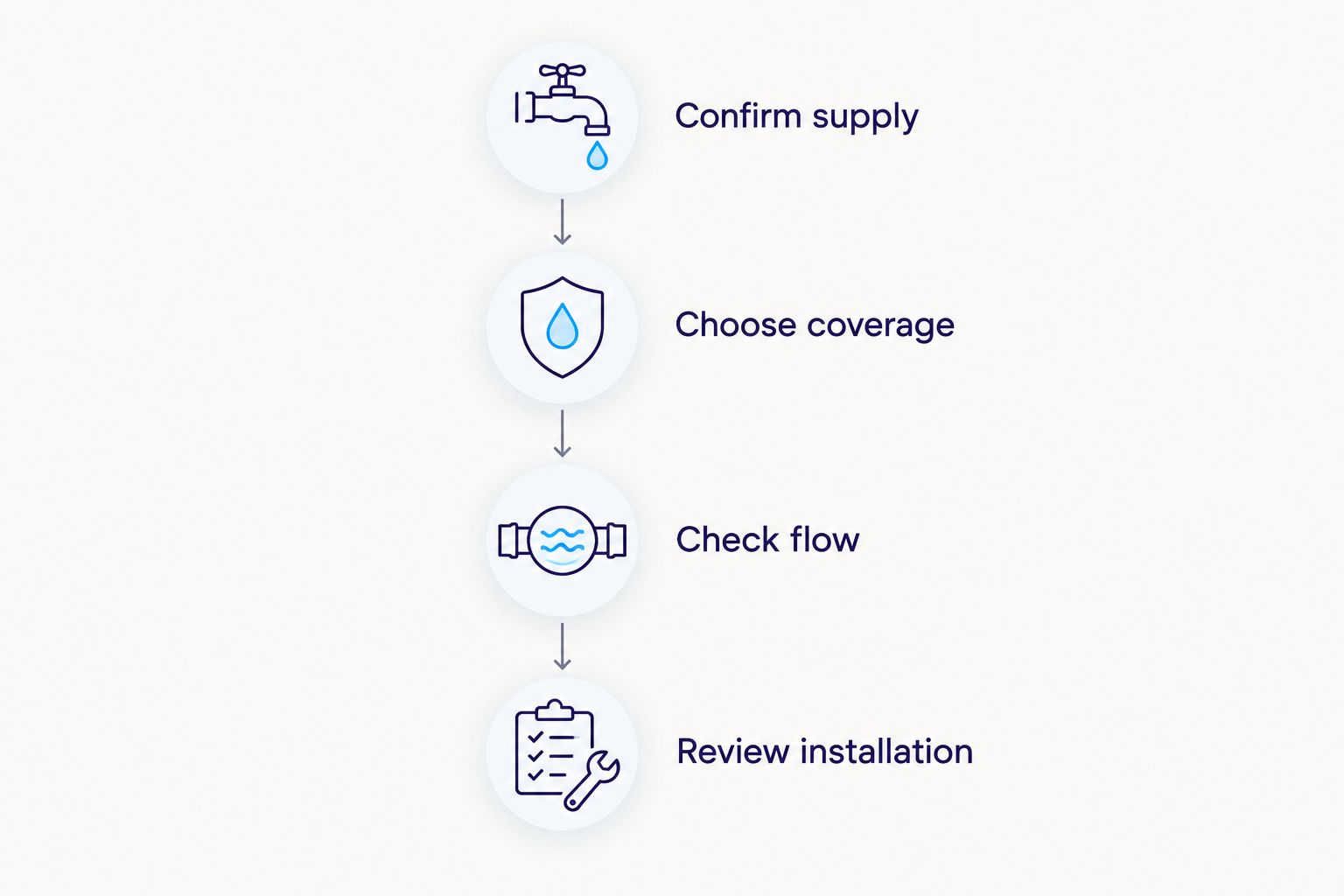
Use this sequence:
- Confirm supply: Check your water supplier's current information and ask which disinfectant applies to your address.
- Choose coverage: Identify whether you want whole-house treatment, one drinking-water outlet, or both.
- Check flow: Describe fixtures that run together and ask how the proposed equipment handles that demand.
- Review installation: Confirm equipment placement, plumbing changes, service access, and required connections.
Bring 3 documents to the decision: current supplier information, the proposed system's performance documentation, and an itemized installation quote. These answer different questions; none replaces the others.
What changes the installation scope?
The work depends on where the incoming line can be accessed, how much plumbing needs alteration, and where equipment can be serviced. A backwashing filter or softener also needs its required drain arrangement addressed in the proposal.
For under-sink RO, cabinet clearance, faucet installation, and drain access affect the work. A requested refrigerator connection adds another routing question rather than being an assumed inclusion.
What should the quote include?
Request the following in writing:
- Exact equipment and the treatment purpose of each stage.
- Chloramine performance information and relevant operating conditions.
- Plumbing connections, shutoff valves, and bypass arrangements.
- Drain work where the selected equipment requires it.
- Startup, operating instructions, and service access.
- Replacement media, cartridges, membranes, or salt responsibilities.
- Any site work excluded from the installation.
Request a personalized quote from PSL Water Guy for your Port St. Lucie or Tradition home. Compare the included work and equipment, not just the proposal's final total.
Request your installation quote
Discuss city-water treatment, installation access, and drinking-water goals for your home.
Which chloramine water filter should you choose?
Choose documented whole-house catalytic carbon treatment as the default when you want chloramine reduction across household fixtures. Choose an under-sink carbon-block system when the goal stops at a drinking-water faucet.
Choose alkaline RO for a separate drinking-water preference, with suitable chloramine pretreatment. Add a softener only when hardness treatment belongs in the plan.
For your 2026 decision, reject proposals that describe the equipment only as premium carbon or whole-house purification. The useful answer names the equipment, explains its purpose, and documents the conditions under which it performs.
FAQ
What’s the best chloramine water filter for a city-water home?
A properly sized whole-house catalytic carbon system is the default for treatment across household fixtures. Choose the exact system using documented chloramine performance, required flow, and installation conditions.
Will a regular carbon filter remove chloramine?
A general carbon-filter claim does not establish chloramine reduction. Check the exact model’s chloramine-specific performance documentation rather than relying on chlorine or taste-and-odor claims.
Can a water softener remove chloramine?
A conventional water softener is not a chloramine treatment system. It reduces hardness minerals; a combination installation needs a separate stage suited to chloramine reduction.
Is reverse osmosis enough for chloraminated city water?
The RO label alone does not establish suitable chloramine treatment. Ask for appropriate carbon pretreatment and documentation for the proposed system and operating conditions.
Does alkaline drinking water mean chloramine has been removed?
No, an alkaline stage does not establish chloramine reduction. Evaluate the upstream filtration separately from the stage intended to adjust finished-water minerals or pH.
Should I filter the whole house or just the kitchen faucet?
Choose whole-house treatment for coverage across connected household fixtures, or point-of-use treatment for a specific drinking-water outlet. The right choice follows your coverage goal, not the equipment’s size.
How much does a chloramine filter installation cost in Port St. Lucie?
Request a personalized installation quote based on the selected equipment and your home’s plumbing. Ask the proposal to identify access work, connections, drainage where required, startup, and maintenance responsibilities.
What should I check before requesting a chloramine filter quote?
Confirm your water supplier and current disinfectant information first. Then describe the fixtures you want covered, simultaneous water use, and available installation space.
One last thing
A higher flow rating is not automatically a better chloramine filter. Check whether the quoted flow describes documented treatment performance or merely how much water can pass through the equipment. That distinction deserves a written answer before installation.


