

Best overall: an under-sink alkaline RO system with a storage tank. Best for keeping cabinet storage clear: a tankless layout that fits the available space. Best for refrigerator drinking water: an RO installation with a planned refrigerator connection. For Port St. Lucie and Tradition homeowners, the best alkaline RO drinking water installation in 2026 starts with your water, plumbing, and daily use—not a stage count.
- Choose an under-sink alkaline RO drinking water installation when a dedicated kitchen faucet meets your needs.
- PSL Water Guy selects residential water treatment around each home’s water and installation needs.
- Tankless RO needs a cabinet, electrical, and performance check; removing the tank does not remove installation constraints.
- Request a personalized quote covering the faucet, drain, alkaline cartridge, installation work, and replacement filters.
Why this matters
An alkaline reverse osmosis system treats drinking water at a selected outlet. It does not replace a whole-house filter or a water softener. Those systems serve different purposes, and adding equipment without defining the job makes quotes harder to compare.
PSL Water Guy is a fit for Port St. Lucie and Tradition homeowners seeking a locally selected alkaline RO drinking water installation. The family-owned business chooses residential treatment around each home's water and needs. Start with PSL Water Guy when you want an installation quote rather than a product box alone.
This 2026 guide ranks installation configurations, not named equipment models. Choose the layout first, then ask for the proposed model, documented performance, and complete installation scope.
What makes the best alkaline RO installation?
Use these criteria before comparing equipment:
- Water suitability: Match pretreatment and membrane requirements to your city-water supply and the proposed system's instructions.
- Cabinet fit: Leave room for equipment, plumbing, filter changes, and access to shutoff valves.
- Drinking-water demand: Compare usable output and refill behavior with how you fill glasses, bottles, and cooking containers.
- Alkaline stage clarity: Ask what the cartridge contains, where it sits, and what maintenance it adds.
- Installation completeness: Identify the faucet, drain connection, tubing route, electrical needs, and any refrigerator connection.
- Service access: Make routine filter replacement practical without dismantling the cabinet interior.
An alkaline cartridge generally adds minerals after reverse osmosis and can change taste and pH. That does not establish a health benefit or prove contaminant reduction. Assess the RO treatment claims separately from the alkaline stage.
Best alkaline RO installations at a glance
| Rank and configuration | Best for | Standout feature | Key limitation |
|---|---|---|---|
| 1. Under-sink alkaline RO with a tank | A dedicated kitchen drinking-water faucet | Stores treated water for dispensing | Tank and filters occupy cabinet space |
| 2. Tankless alkaline RO | Preserving usable cabinet storage | Removes the separate storage tank | Requires careful output, clearance, and electrical checks |
| 3. Alkaline RO with a refrigerator connection | Supplying the kitchen faucet and refrigerator | Extends treated water to another destination | Tubing route and refrigerator requirements complicate the scope |
| 4. Alkaline RO coordinated with whole-house treatment | Addressing drinking water and separate household concerns | Assigns each treatment system a defined job | More equipment means more installation and maintenance planning |
These are layout recommendations, not claims that every model supports every connection. Require the installer to confirm the proposed equipment's suitability before approving the work.
1. Tank-based alkaline RO: best for a dedicated kitchen faucet
An under-sink tank-based system filters water through an RO membrane and stores treated water for dispensing. An alkaline cartridge adds a separate finishing stage. The installer must identify that cartridge's position in the proposed plumbing arrangement.
Best for: You want drinking and cooking water at a dedicated kitchen faucet, and your cabinet can accommodate the equipment while preserving service access.
Tank-based alkaline RO pros
- Stored treated water is ready to dispense without relying only on the membrane's immediate production.
- A dedicated faucet clearly separates treated drinking water from the regular kitchen supply.
- The installation can stay focused on the kitchen rather than expanding into whole-house treatment.
Tank-based alkaline RO cons
- The tank takes space alongside filters, drain plumbing, and other cabinet contents.
- Usable stored water and refill performance depend on the equipment and operating conditions.
For a 2026 installation quote, ask the installer to show where the tank will sit and how filters will be removed. A system that fits only after blocking a shutoff valve is not a good layout.
Do not judge this configuration by the number of filter stages. Ask what each stage does and whether the proposed system has documented performance for your specific treatment goal.
Verdict: Buy this configuration when cabinet space supports a serviceable installation and a dedicated faucet meets your needs.
2. Tankless alkaline RO: best for preserving cabinet storage
A tankless configuration produces treated water without a separate storage tank. That changes the cabinet layout, but it does not eliminate the membrane housing, cartridges, tubing, or service clearances. Confirm whether the proposed model requires an electrical outlet.
Best for: You need to preserve cabinet storage and can provide the clearances, connections, and electrical supply required by the selected model.
Tankless alkaline RO pros
- Removing a separate tank creates another option for arranging the cabinet.
- The installer can assess one equipment enclosure rather than finding separate tank space.
- It offers a useful alternative when a tank obstructs access to existing plumbing.
Tankless alkaline RO cons
- Dispensing performance depends on the selected equipment and incoming operating conditions.
- Electrical requirements and cartridge-removal clearance can rule out an otherwise attractive location.
Ask to see the full installation dimensions, not just the enclosure dimensions. You also need access to connections and enough clearance to replace cartridges without damaging nearby plumbing.
For your 2026 comparison, ask how the proposed system handles your normal bottle or cooking-container fill. Do not assume that “tankless” means faster, smaller in every direction, or simpler to install.
Verdict: Hold until the installer confirms usable cabinet space, electrical requirements, and drinking-water output.
3. Alkaline RO with a refrigerator connection: best for connected dispensing
An RO installation can serve a refrigerator when the equipment, pressure, and connection arrangement are compatible. This is a plumbing configuration rather than a separate filtration method. Specify whether refrigerator water passes through the alkaline stage instead of assuming that it does.
Best for: You want treated water at the kitchen drinking faucet and refrigerator, with a confirmed tubing route between them.
Refrigerator-connected alkaline RO pros
- Extends the planned drinking-water treatment to another dispensing point.
- Lets you define kitchen-faucet and refrigerator requirements in the same installation scope.
- Makes tubing, shutoff access, and connection responsibilities explicit before work begins.
Refrigerator-connected alkaline RO cons
- Concealed tubing routes and access limitations add installation work.
- Refrigerator inlet requirements must match the delivered pressure and flow.
Identify 2 drinking-water destinations in the quote: the dedicated faucet and the refrigerator. Ask whether both receive alkaline-finished water and whether any existing refrigerator filter remains in use under the manufacturer's instructions.
Do not approve a refrigerator connection based only on physical proximity. The installer needs to assess the route, appliance requirements, and operation when water is drawn.
Verdict: Buy only after the quote defines the refrigerator connection and confirms compatibility.
4. Coordinated treatment: best for separate household water concerns
Whole-house filtration, water softening, and drinking-water RO perform different jobs. A whole-house filter addresses specified treatment needs across the connected household supply. A softener addresses hardness, while the RO system treats water at the designated drinking-water outlet.
Best for: You want alkaline drinking water and also have a separately identified reason to consider whole-house filtration or softening.
Coordinated treatment pros
- Separates drinking-water goals from hardness and whole-house treatment goals.
- Allows the installer to consider how upstream treatment affects the proposed RO equipment.
- Creates a clear plan for equipment placement, maintenance, and shutoff access.
Coordinated treatment cons
- Additional equipment brings additional maintenance responsibilities.
- A combined proposal is harder to compare unless each system's purpose and scope are itemized.
PSL Water Guy offers whole-house treatment, water softeners, and alkaline reverse osmosis drinking-water installations. Ask for each proposed system to have its own stated purpose; do not accept “better water” as the entire explanation.
In a 2026 combined quote, separate the drinking-water installation from the whole-house work. That lets you decide whether to proceed together or keep the immediate project focused on the kitchen.
Verdict: Buy coordinated treatment only when each component addresses a defined household need.
Plan the installation before choosing the equipment
A practical installation sequence starts with the water supply and ends with service access. Use these steps to keep the equipment choice tied to the house:
- Check supply: Identify your city-water supplier and assess the information relevant to the proposed treatment.
- Inspect cabinet: Check plumbing, shutoff access, drain arrangement, and available equipment space.
- Choose outlets: Decide whether the installation serves a dedicated faucet, the refrigerator, or both.
- Confirm scope: Record equipment, connection work, commissioning, and maintenance instructions in the quote.
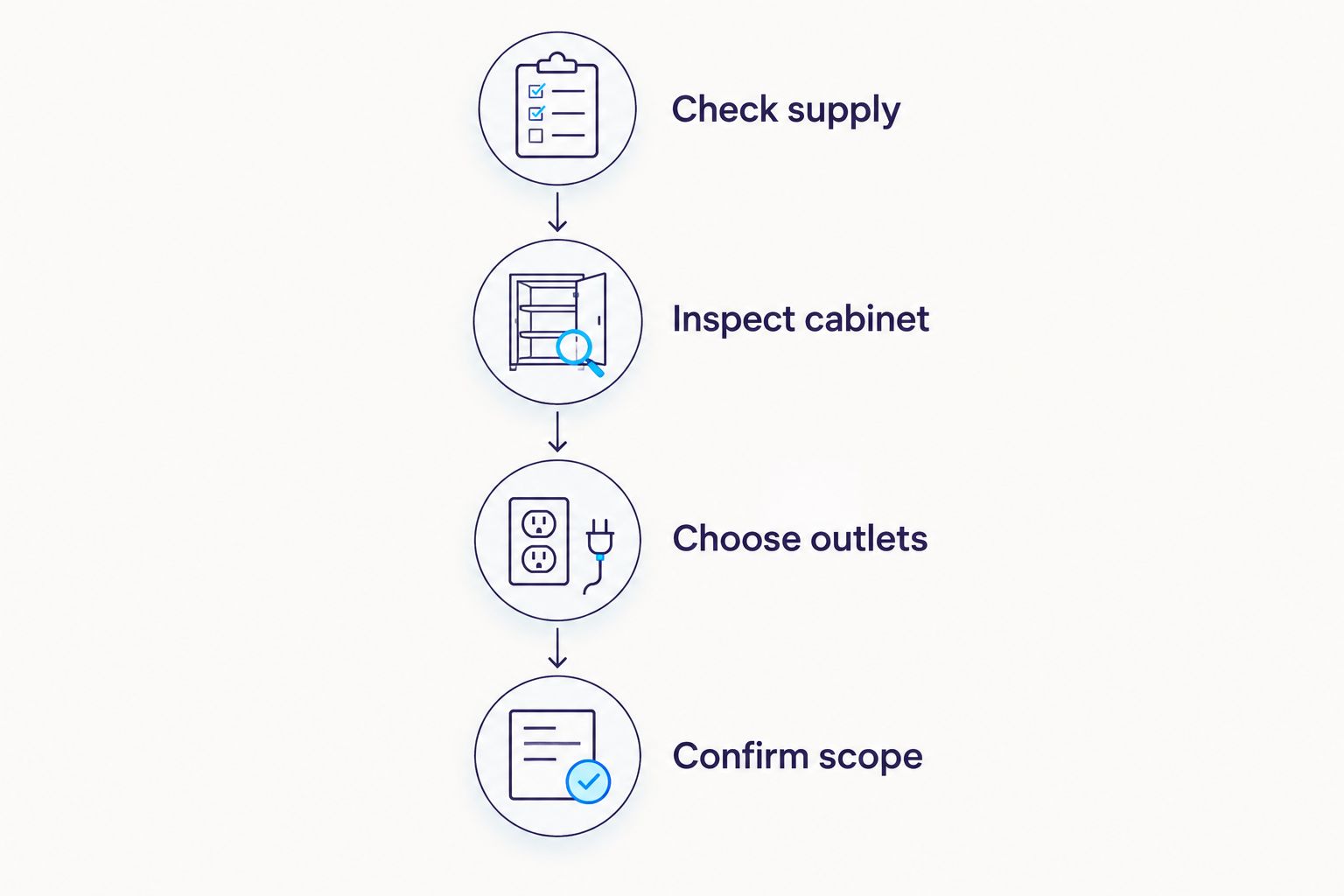
Before requesting a quote, prepare 3 cabinet photos: a wide view, a view of the supply connections, and a view of the drain area. These are preparation steps, not a substitute for an installation assessment. Include the refrigerator location if you want that connection reviewed.
What should your installation quote include?
Request 1 itemized installation scope that identifies what you are approving. A list of equipment names alone does not explain the work required in your kitchen.
Ask the quote to address:
- Equipment: Proposed RO model, alkaline cartridge, storage arrangement, and documented treatment claims.
- Faucet work: Faucet provision, mounting location, and any required countertop or sink work.
- Water connections: Feed connection, shutoffs, tubing route, and drain connection.
- Additional requirements: Electrical supply and refrigerator connection work where applicable.
- Completion checks: Leak checks, manufacturer-required flushing, and operating instructions.
- Maintenance: Replacement components, service access, and the basis for replacement timing.
Installation cost depends on the equipment, existing plumbing, faucet work, access, and requested connections. Review what affects reverse osmosis installation cost in Port St. Lucie before comparing proposals. Request a personalized quote rather than applying a generic figure to your home.
Request your installation quote
Discuss your city-water supply, cabinet layout, and drinking-water outlets with PSL Water Guy.
How these configurations rank
The ranking prioritizes a clear treatment goal, serviceable cabinet fit, appropriate dispensing performance, and complete installation scope. A tank-based kitchen installation is the default because it directly matches a dedicated drinking-water use case—not because every tank-based model outperforms every alternative.
Choose tankless for a verified space constraint, a refrigerator connection for a defined additional outlet, and coordinated treatment for separate household needs. No configuration earns its place through an unsupported health claim or a longer stage list.
Which alkaline RO installation should you choose?
Choose a serviceable under-sink alkaline RO installation unless your cabinet or dispensing requirements justify another configuration. Keep the initial decision focused on where you drink water and how the equipment will be maintained.
For a Port St. Lucie or Tradition home in 2026, ask PSL Water Guy to quote the configuration that fits your city water and kitchen. Approve the proposed model and written installation scope together.
FAQ
What’s the best alkaline RO drinking water installation for my home?
A serviceable under-sink alkaline RO installation is the default choice when you want a dedicated kitchen drinking-water faucet. Choose tank-based or tankless equipment after checking cabinet space, operating requirements, and your dispensing needs.
Is tankless alkaline RO better than a system with a tank?
Tankless alkaline RO is better for your layout only when removing the tank creates useful space without compromising installation or dispensing requirements. Compare complete installed dimensions, electrical needs, and cartridge access rather than the tank alone.
Does alkaline reverse osmosis make drinking water healthier?
An alkaline stage does not establish a health benefit. It generally adds minerals after RO and can change taste and pH; assess documented contaminant-reduction claims separately.
Can alkaline RO supply my refrigerator?
An alkaline RO system can supply a refrigerator when the proposed equipment and connection meet the appliance’s requirements. Confirm the tubing route, delivered pressure, and whether refrigerator water passes through the alkaline stage.
Do I need a water softener with alkaline RO?
Alkaline RO does not automatically create a need for a water softener. Base softening on your home’s hardness-related needs and the proposed RO manufacturer’s feed-water requirements.
How much does alkaline RO installation cost in Port St. Lucie?
Request a personalized installation quote for your Port St. Lucie home. Equipment selection, plumbing access, faucet work, electrical requirements, and refrigerator connections determine the installation scope.
What maintenance does an alkaline RO system need?
An alkaline RO system needs filter, membrane, and alkaline-cartridge care according to the selected equipment’s instructions and operating conditions. Ask for replacement component details, service procedures, and access requirements before installation.
One last thing
Ask the installer to demonstrate how the largest replacement component comes out of the cabinet. Equipment that fits on installation day can still be awkward to service. Approve a maintainable layout, not just equipment that fits behind a closed door.


